


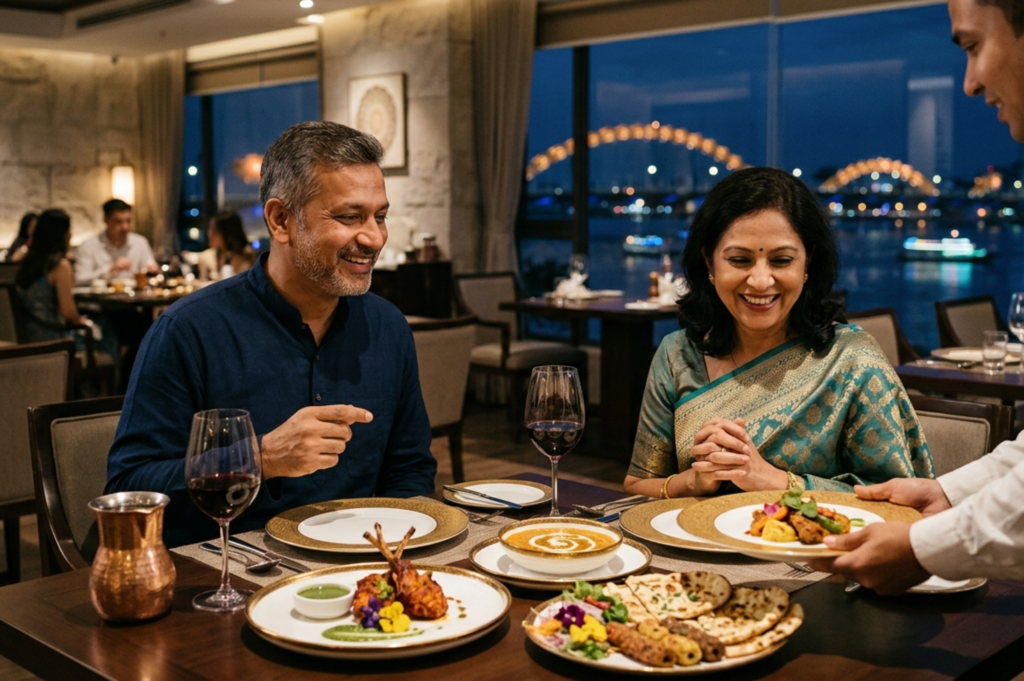
Indian Fine Dining Experience in Da Nang: What to Expect Before You Visit

Why Travelers Search for an Indian Fine Dining Experience in Da Nang
When people think about fine dining, they often imagine more than just food. They are looking for an experience—something memorable that becomes part of their trip rather than simply another meal.
In Da Nang, travelers have an increasingly diverse range of dining options. While local Vietnamese cuisine remains a major attraction, many visitors also seek international dining experiences that combine authenticity, hospitality, and carefully prepared food.
Indian cuisine has become one of those experiences.
For some guests, it’s a chance to reconnect with familiar flavors while traveling. For others, it’s an opportunity to explore one of the world’s most diverse culinary traditions in a relaxed and welcoming setting.
But what exactly should you expect from an Indian fine dining experience in Da Nang?
The answer goes far beyond curries and naan.
Fine Dining Is About More Than Formality
One misconception many travelers have is that fine dining automatically means a formal or intimidating environment.
Modern Indian dining experiences are often much more approachable.
Guests typically expect:
- Attentive service
- Consistent food quality
- Thoughtfully prepared dishes
- Comfortable surroundings
- A memorable overall experience
The goal isn’t to create distance between guests and food. Instead, it’s to help people slow down, enjoy the meal, and appreciate the traditions behind it.
Understanding the Diversity of Indian Cuisine
One reason Indian dining feels unique is the extraordinary diversity within the cuisine itself.
India’s culinary traditions vary significantly by region.
A well-rounded dining experience may include influences from:
North India
Known for:
- Rich curries
- Tandoori cooking
- Naan breads
- Paneer dishes
- Slow-cooked gravies
South India
Known for:
- Dosa
- Coconut-based preparations
- Rice-focused dishes
- Lentil specialties
- Distinct spice profiles
For many travelers, discovering this diversity becomes one of the most enjoyable aspects of the meal.
The Experience Often Begins With Sharing
Unlike some dining traditions where everyone orders a completely separate meal, Indian dining often encourages sharing.
Guests commonly order:
- Multiple curries
- Fresh breads
- Rice dishes
- Appetizers
- Regional specialties
The table becomes a collection of different flavors and textures rather than a series of individual plates.
For families, couples, and groups of friends, this creates a naturally social dining experience.
Signature Dishes Many Guests Explore
Every guest arrives with different expectations.
Some seek familiar favorites.
Others want to try something entirely new.
Popular choices often include:
Butter Chicken
A rich tomato-based curry that many first-time visitors find approachable.
Paneer Butter Masala
A vegetarian favorite featuring Indian cottage cheese in a flavorful gravy.
Biryani
A layered rice dish known for its aromatic spices and satisfying character.
Tandoori Specialties
Prepared using traditional cooking techniques that create distinctive smoky flavors.
South Indian Dishes
Many guests enjoy exploring regional specialties such as Dosa after becoming familiar with North Indian cuisine.
Why Travelers Often Choose Indian Cuisine During Their Stay
Food choices while traveling are rarely random.
Many visitors spend their days:
- Exploring Da Nang
- Visiting cultural attractions
- Enjoying the beach
- Taking day trips
By evening, they often seek meals that feel satisfying and memorable.
Indian cuisine appeals because it combines:
- Comfort
- Variety
- Authenticity
- Shareability
Guests can enjoy familiar dishes or discover entirely new flavors depending on their preferences.
What We See at Manvar Rasoi
One of the most interesting things we observe is how guests define “fine dining.”
For many travelers, it isn’t about luxury in the traditional sense.
Instead, they tell us they value:
- Consistency
- Authentic flavors
- Genuine hospitality
- Confidence in ingredient quality
- A relaxed atmosphere where they can enjoy the meal at their own pace
We often see first-time guests begin with familiar dishes such as Butter Chicken or Paneer Butter Masala.
However, returning visitors frequently become more adventurous. After gaining confidence in the menu, they start exploring regional specialties, South Indian dishes, and lesser-known recipes.
Families often prefer shared dining experiences where several dishes are placed in the center of the table. This creates opportunities for conversation and discovery that guests regularly mention when describing memorable meals.
We also notice that many international travelers ask questions about ingredients, cooking methods, and regional food traditions. These conversations often become an important part of the overall dining experience.
Those interactions remind us that guests are often looking for more than food. They want context, authenticity, and a deeper connection to the cuisine.
The Importance of Authentic Preparation
Authenticity has become increasingly important to modern travelers.
Many guests are no longer satisfied with generic international dishes.
They want food that reflects:
- Regional traditions
- Culinary heritage
- Traditional preparation methods
- Cultural identity
Authentic Indian cuisine provides exactly that.
Every dish tells part of a larger story about India’s diverse food culture.
A Dining Experience for Different Dietary Preferences
Another reason Indian cuisine continues to attract a wide audience is its flexibility.
Indian menus often accommodate:
Vegetarian Diners
With numerous traditional vegetarian recipes.
Vegan Travelers
Through plant-based curries, lentils, and vegetable dishes.
Families
By offering a wide variety of flavors and textures.
First-Time Explorers
With approachable dishes that introduce Indian cuisine gradually.
This versatility makes Indian dining accessible to many different types of travelers.
The Role of Hospitality in Indian Dining
Food is only part of the experience.
Hospitality has always been deeply connected to Indian dining traditions.
Guests often appreciate:
- Personalized recommendations
- Menu guidance
- Accommodation of dietary preferences
- Attention to individual tastes
These details help transform a meal into a memorable dining experience.
Why Fine Dining Experiences Create Lasting Travel Memories
Many travelers remember specific meals long after a trip has ended.
The reason is rarely the food alone.
People remember:
- The atmosphere
- The conversations
- The discoveries
- The people they shared the meal with
Indian dining naturally supports those moments because the cuisine encourages exploration and shared experiences.
Frequently Asked Questions
What makes Indian fine dining different from a regular meal?
Indian fine dining focuses on the overall experience, including hospitality, authenticity, food quality, presentation, and guest satisfaction.
Is Indian fine dining suitable for first-time visitors?
Yes. Many guests begin with familiar dishes before exploring more regional specialties.
Do Indian meals encourage sharing?
Traditionally, yes. Many guests order multiple dishes and share them with family or friends.
Can vegetarian diners enjoy an Indian fine dining experience?
Absolutely. Indian cuisine includes a large variety of vegetarian dishes that are central to traditional cooking.
Final Thoughts
An Indian fine dining experience in Da Nang is about far more than ordering a meal. It is an opportunity to explore one of the world’s richest culinary traditions through authentic flavors, thoughtful hospitality, and shared dining experiences.
At Manvar Rasoi, we’ve had the privilege of serving travelers from around the world and observing how food becomes part of their journey. Some guests arrive seeking familiar comfort, while others come looking for something completely new. In both cases, the most memorable experiences often come from discovering the stories, traditions, and connections behind the food itself.
For travelers exploring Da Nang, Indian cuisine offers not only exceptional dishes but also a dining experience that many continue to remember long after they return home.